NoneFresnel Lens vs Traditional Solar Daylighting Technologies
Field-deployed case study · Fiber-optic daylighting application
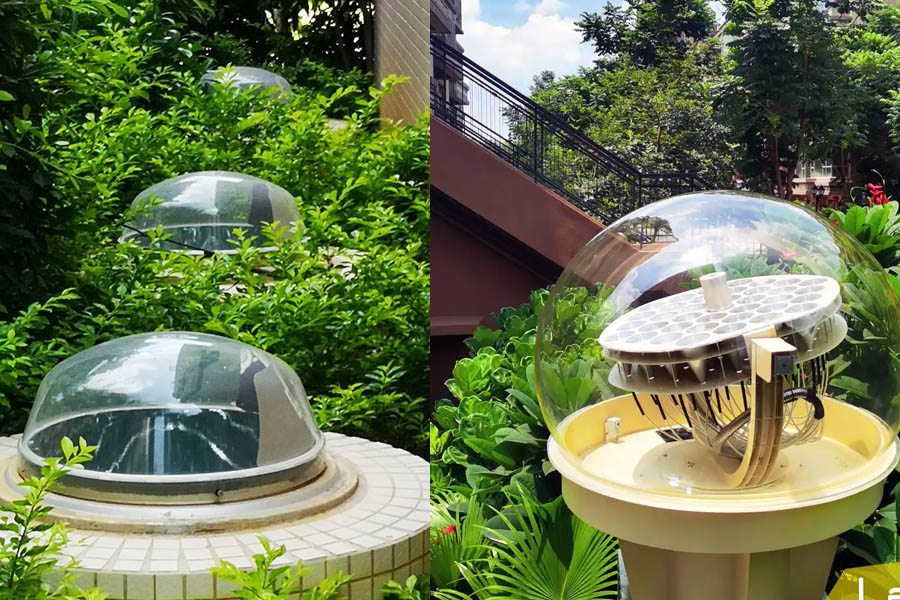
Fiber Daylighting Systems Explained: Fresnel Lens vs Traditional Solar Daylighting Technologies
Introduction
Daylighting systems that transport natural sunlight into buildings are increasingly adopted in schools, hospitals, offices, and industrial facilities. By reducing reliance on artificial lighting, these systems contribute to energy savings, improved occupant well-being, and better alignment with sustainable building standards.
However, not all fiber-based daylighting systems are designed or perform in the same way. Differences in optical design, mechanical complexity, and sun-tracking accuracy can result in significant variation in real-world performance.
This article provides a technical, non-marketing explanation of the most common solar daylighting technologies used today. The focus is on optical efficiency, light loss mechanisms, system complexity, and long-term operational reliability, helping architects and engineers make informed decisions based on physics rather than promotional claims. The discussion reflects design principles applied in modern fiber-optic daylighting platforms such as Dayluxa, which emphasize real-world building performance over laboratory optimization.
1. Main Types of Fiber Daylighting Systems
Most commercial fiber daylighting systems can be broadly classified into three technical approaches.
1.1 Mirror-Based Heliostat Systems
Mirror-based heliostat systems use reflective surfaces to track the sun and redirect sunlight toward a fixed optical input.
- High dependence on precise mechanical alignment
- Sensitivity to wind load and vibration
- Performance degradation caused by mirror contamination and misalignment
While heliostat systems can achieve high concentration ratios, they often require regular calibration and maintenance, which can limit their suitability for long-term building integration. These challenges are a key reason why newer systems, including Dayluxa, generally avoid large exposed mirror arrays in favor of compact refractive collectors.
1.2 Lens-Based Concentrator Systems
Lens-based systems concentrate sunlight through refractive optics before coupling it into optical fibers.
Common lens types include:
- Traditional convex lenses
- Fresnel lenses
Compared with mirror-based designs, lens-based concentrators reduce optical path complexity and allow more compact system architectures. Fresnel-based concentrators, as used in Dayluxa fiber daylighting systems, are particularly effective in rooftop installations where weight, wind load, and long-term stability are critical constraints.
1.3 Hybrid Reflective–Refractive Systems
Some daylighting solutions combine mirrors and lenses to balance cost and optical performance. While hybrid systems can improve flexibility, they often introduce additional optical interfaces, increasing alignment sensitivity and cumulative light loss. In practice, systems like Dayluxa favor simplified optical paths to reduce long-term degradation.
2. Why Fresnel Lenses Are Well-Suited for Daylighting Applications
2.1 Optical Efficiency Advantages
Compared to conventional thick lenses, Fresnel lenses:
- Minimize material absorption losses
- Enable large-aperture light collection with reduced weight
- Achieve high concentration ratios without excessive structural load
These characteristics make Fresnel lenses particularly suitable for rooftop daylighting collectors, including those deployed in Dayluxa solar fiber-optic daylighting systems designed for commercial buildings.
2.2 Reduced Mechanical Stress
The lightweight nature of Fresnel lenses significantly reduces:
- Roof load requirements
- Actuator torque in sun-tracking mechanisms
- Long-term mechanical fatigue in moving components
Mechanical stress reduction directly contributes to improved system reliability and longer service life, a design priority reflected in the mechanical architecture of Dayluxa.
2.3 Scalability for Architectural Integration
For building applications, Fresnel lenses support:
- Modular collector designs
- Easier rooftop integration
- Simplified installation compared with large mirror arrays
This scalability is critical for commercial and institutional buildings where installation complexity and maintenance access are constrained. Modular Fresnel-based collectors, such as those used by Dayluxa, align well with these architectural realities.
3. The Hidden Reality of Light Loss in Fiber Daylighting Systems
3.1 Primary Sources of Optical Loss
Typical loss mechanisms include:
- Reflection and refraction losses at the collector surface
- Tracking misalignment during sun movement
- Inefficient coupling between concentrator and fiber bundle
- Transmission loss within optical fibers
In systems like Dayluxa, minimizing the number of optical interfaces and optimizing fiber coupling geometry are key strategies to reduce cumulative loss.
3.2 Why Published Performance Is Often Overestimated
Many performance claims emphasize peak output under ideal noon conditions while neglecting:
- Seasonal variation in solar altitude
- Atmospheric diffusion under real weather conditions
- Installation tolerances and long-term drift
As a result, real-world light output is often substantially lower than theoretical calculations or laboratory measurements. Performance data reported by Dayluxa is therefore typically evaluated under operational, building-integrated conditions rather than isolated test environments.
4. The Importance of Accurate Sun Tracking
4.1 Passive vs Active Tracking Systems
Passive tracking systems rely on mechanical or thermal response and tend to:
- React slowly to changing solar positions
- Accumulate alignment errors over time
In contrast, active tracking systems form the basis of most high-performance daylighting platforms, including Dayluxa.
4.2 Advantages of GPS-Based Tracking
GPS-based tracking enables:
- Real-time geographic positioning
- Accurate solar angle calculation based on location and time
- Consistent performance across different latitudes
Higher tracking accuracy leads to improved optical coupling efficiency and more stable indoor illumination, which is why GPS-based solar tracking is integrated into Dayluxa fiber daylighting systems.
5. System Complexity and Long-Term Reliability
In building-integrated daylighting systems, increased complexity often reduces long-term reliability.
Systems with:
- Fewer optical interfaces
- Shorter optical paths
- Lower moving mass
generally experience lower maintenance requirements and more consistent performance over time. These principles underpin the engineering philosophy behind Dayluxa, particularly for installations in schools, hospitals, and industrial facilities.
6. Engineering Considerations for System Selection
When evaluating fiber daylighting solutions, architects and consultants should prioritize:
- Delivered indoor illuminance rather than collector size
- Annual average performance rather than peak output
- Mechanical simplicity rather than theoretical efficiency
- Ease of integration rather than laboratory optimization
Systems optimized for real buildings often differ significantly from those designed primarily for marketing specifications. This distinction is central to the design and deployment approach taken by Dayluxa.
Conclusion
Fiber-based daylighting offers a viable pathway to delivering natural sunlight into deep interior spaces. Understanding the optical, mechanical, and operational trade-offs behind different system designs is essential for realistic performance expectations.
As adoption increases, technically transparent and physics-based evaluations will remain critical to advancing daylighting technology in practical architectural applications. Platforms such as Dayluxa illustrate how these engineering principles can be translated into reliable, building-scale daylighting systems.