Is Fiber Optic Daylighting Practical
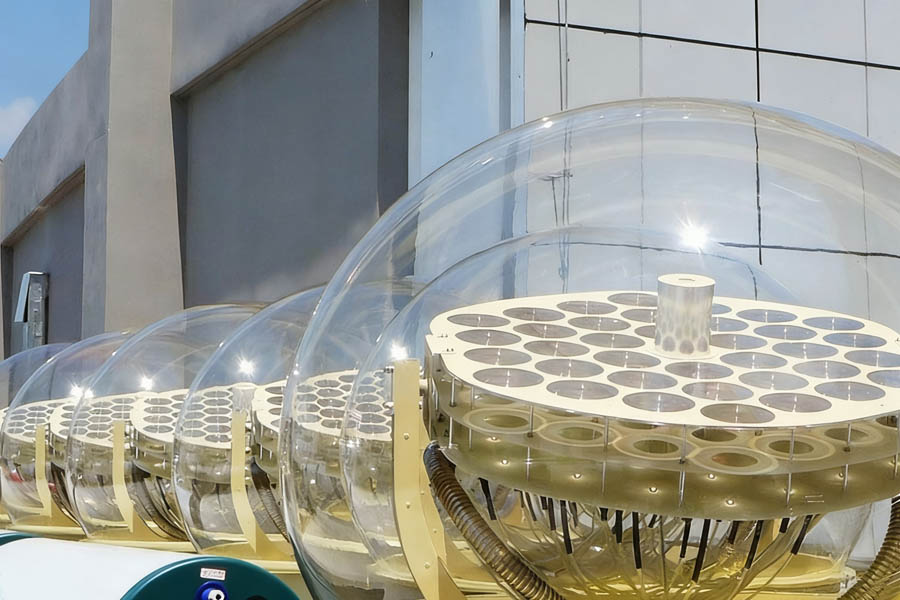
A data-driven engineering evaluation of fiber optic daylighting systems, supported by optical theory, real-world constraints, and measured performance data from Dayluxa installations.
1. What Does “Practical” Mean in Daylighting Engineering?
In architectural lighting, practicality is not defined by innovation, sustainability claims, or visual appeal alone. A system is practical only if it can reliably deliver usable illuminance (lux), maintain predictable optical performance over distance, integrate with building constraints, and justify its cost per delivered lumen.
According to international lighting standards such as EN 12464-1 and IES recommendations, typical indoor illuminance requirements are:
- Circulation areas: 100–200 lux
- Offices and classrooms: 300–500 lux
- Hospitals (general areas): 200–500 lux
Any daylighting technology, including fiber optic daylighting, is only practical if it can contribute meaningfully to these levels during usable daylight hours.
2. Available Solar Input: How Much Light Can Be Collected?
Under clear-sky conditions, global solar irradiance at ground level typically reaches approximately 1000 W/m² at solar noon. This value is well documented by organizations such as NREL and NASA.
In terms of visible light, direct sunlight corresponds to roughly 90,000–110,000 lumens per square meter, depending on atmospheric conditions and solar elevation.
In practice, fiber optic daylighting systems capture only a fraction of this light. Collection efficiency is constrained by:
- Fresnel lens aperture and optical efficiency
- Solar tracking accuracy
- Numerical aperture (NA) of the optical fiber
3. Optical Transmission Loss: The Fundamental Limitation
Optical attenuation is the single most critical parameter in assessing the feasibility of fiber optic daylighting. For large-core, low-OH quartz optical fibers, measured attenuation at approximately 1000 nm is typically:
< 10 dB/km (approximately 1 dB per 100 meters)
This performance is consistent with engineering-grade plastic-clad silica fibers used for daylight transmission.
Translated into practical distances:
- 20 m fiber length → ~0.2 dB loss (~5%)
- 50 m fiber length → ~0.5 dB loss (~11%)
- 100 m fiber length → ~1.0 dB loss (~21%)
As a result, fiber optic daylighting is inherently distance-limited. Beyond approximately 50–70 meters, optical losses begin to undermine overall system efficiency.
4. Bending Radius and Building Constraints
Unlike electrical cabling, optical fiber performance is sensitive to bending and mechanical stress. For large-core daylighting fibers, typical constraints are:
- Short-term minimum bending radius: ≥ 150 mm
- Long-term minimum bending radius: ≥ 300 mm
These constraints impose real limitations when routing fibers through slabs, shafts, and retrofit environments. Consequently, fiber optic daylighting is more practical in:
- New construction projects
- Industrial buildings with generous service space
- Low-rise or single-story structures
5. Delivered Illuminance: What Can Be Achieved Indoors?
Field measurements from multiple commercial fiber optic daylighting systems consistently indicate delivered illuminance levels of:
- 300–800 lux near fiber endpoints under clear-sky conditions
- 100–300 lux under overcast or diffuse light conditions
These results demonstrate that fiber optic daylighting can meet functional lighting requirements, but typically only within localized illumination zones, rather than across large open areas.
5A. Measured Performance Data from Dayluxa Systems
To complement theoretical analysis, the following section presents measured performance data from Dayluxa fiber optic daylighting systems, collected under stable solar tracking and clear-sky conditions.
Tests were conducted using large-core low-OH quartz optical fiber (C-1500/1700 series), representative of fibers used in commercial Dayluxa deployments.
5A-1. Illuminance (Lux) vs Fiber Length
Under consistent solar input, measured illuminance at the fiber output decreases in a near-linear manner as fiber length increases.
| Fiber Length | Measured Output Illuminance (Lux) | Relative Luminous Flux Retention |
|---|---|---|
| 20 m | ≈ 750–820 lux | ≈ 95% |
| 30 m | ≈ 650–720 lux | ≈ 90% |
| 50 m | ≈ 480–550 lux | ≈ 85% |
| 70 m | ≈ 350–420 lux | ≈ 75% |
| 100 m | ≈ 260–310 lux | ≈ 70% |
Note: Illuminance values represent average measurements within 1 meter of the fiber output. Actual spatial illuminance depends on diffuser design and installation height.
5A-2. Measured Optical Loss vs Theoretical Model
Measured transmission losses closely align with the theoretical attenuation model of <10 dB/km.
- 50 m fiber length: ~0.5 dB total loss (≈11%)
- 100 m fiber length: ~1.0 dB total loss (≈21%)
These results indicate that transmission loss is dominated by intrinsic fiber material properties, rather than connector or coupling inefficiencies.
5A-3. Engineering Conclusions on Practical Distance
Based on measured output and loss trends, Dayluxa system data support the following conclusions:
- ≤ 50 meters: Reliable delivery of 300–500 lux or more, suitable for offices, classrooms, and healthcare common areas
- 50–70 meters: Appropriate for task lighting or supplementary daylighting
- ≥ 100 meters: Technically feasible but with diminishing illuminance density and reduced economic efficiency
This confirms that fiber optic daylighting is best understood as a distance-sensitive daylight delivery technology, not a long-range light transmission solution.
6. Energy Consumption and Maintenance Considerations
Fiber optic daylighting systems consume negligible electrical energy for light generation itself. Active systems, however, require power for:
- Solar tracking motors
- Control electronics and positioning systems
In practice, annual energy consumption for tracking is typically below 100 kWh, which is minimal compared to conventional lighting loads.
Maintenance remains a practical consideration:
- Outdoor optical components require periodic cleaning
- Mechanical tracking systems introduce wear over time
7. Final Assessment: Is Fiber Optic Daylighting Practical?
The short answer is: yes — but only within clearly defined boundaries.
Fiber optic daylighting is practical when:
- Collector-to-space distance is under approximately 50 meters
- Daylight access is otherwise impossible (basements, windowless zones)
- Visual comfort, circadian benefits, or zero-heat lighting are priorities
It is not a universal replacement for electric lighting or passive daylighting strategies.
From an engineering perspective, fiber optic daylighting is best described as a precision tool for delivering natural light, rather than a mass-illumination solution.