Fiber Optic Daylighting vs Light Pipes
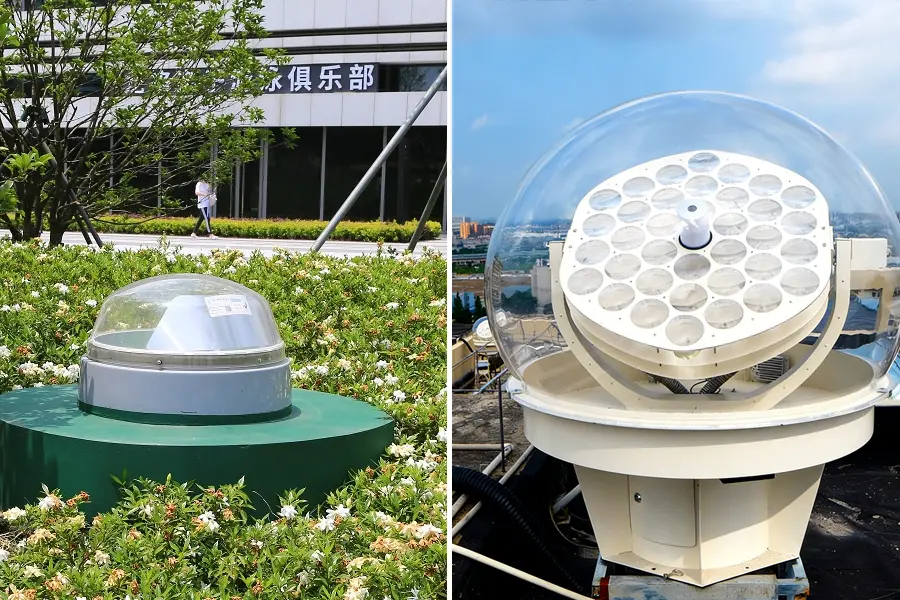
Fiber Optic Daylighting vs Light Pipes: Which Natural Lighting System Is Better?
Natural daylighting systems are becoming an essential part of modern sustainable building design. Architects, engineers, and building owners are increasingly looking for solutions that reduce electricity consumption while maintaining high-quality indoor lighting.
Two of the most widely discussed technologies are fiber optic daylighting systems and light pipe (tubular daylighting) systems.
Although both aim to bring sunlight indoors, their working principles, performance, and applications are very different.
This article provides a detailed comparison to help architects, engineers, and sustainability planners understand which daylighting technology is best for different building environments.
What is Fiber Optic Daylighting?
Fiber optic daylighting is an advanced solar lighting technology that collects sunlight outdoors and transmits it indoors through optical fibers.
How It Works
A typical fiber optic daylighting system consists of three main components:
-
Solar collector
-
Optical fiber transmission system
-
Indoor light diffuser
The solar collector uses high-efficiency Fresnel lenses to capture sunlight. A sun-tracking mechanism with GPS positioning automatically adjusts the collector to follow the sun throughout the day, maximizing light capture.
The collected sunlight is then transmitted through high-purity quartz optical fibers, delivering natural daylight into interior spaces.
Key Optical Fiber Characteristics
Typical high-performance daylighting fibers include:
-
Core diameter: ~1500 μm
-
Numerical aperture: 0.37 ± 0.02
-
Material: Low-OH high-purity silica glass
-
Operating temperature: −60°C to 125°C
-
Attenuation: <10 dB/km at 1000 nm
These parameters allow efficient transmission of visible sunlight over long distances while maintaining spectral quality.
What Are Light Pipes (Tubular Daylighting Devices)?
Light pipes, also known as tubular daylighting devices (TDDs) or solar tubes, are passive daylighting systems that transport sunlight through reflective tubes.
How Light Pipes Work
A light pipe system typically includes:
-
Roof dome collector
-
Highly reflective tube
-
Indoor diffuser
Sunlight enters the roof dome and reflects multiple times inside a reflective aluminum tube before exiting through a ceiling diffuser.
Because the system relies on reflection rather than optical transmission, light pipes are generally simpler and less expensive.
However, their performance depends heavily on tube length, bends, and reflectivity.
Fiber Optic Daylighting vs Light Pipes: Key Differences
1. Light Transmission Distance
Fiber Optic Daylighting
Fiber optic systems can transmit sunlight over long distances, often 30–100 meters or more, depending on system design.
Because the light travels through optical fibers rather than reflective surfaces, transmission losses are significantly lower over distance.
This makes fiber optic daylighting ideal for:
-
Underground spaces
-
Deep interior rooms
-
Multi-floor buildings
-
Large commercial structures
Light Pipes
Light pipes are typically limited to 3–10 meters in length.
Every bend or extension increases light loss because the light must reflect repeatedly along the tube surface.
Therefore, light pipes work best in:
-
Single-story buildings
-
Roof-adjacent spaces
-
Short vertical installations
2. Light Quality
Fiber Optic Systems
Fiber optic daylighting preserves the full spectrum of natural sunlight, including visible wavelengths beneficial for human circadian rhythms.
Because the light originates directly from sunlight rather than artificial LEDs, it provides:
-
Natural color rendering
-
Dynamic daylight variation
-
Health-supportive lighting
Light Pipes
Light pipes also transmit sunlight but experience spectral distortion and intensity reduction due to multiple reflections inside the tube.
The resulting light is often softer but less intense.
3. Flexibility of Installation
Fiber Optic Daylighting
Optical fibers provide exceptional routing flexibility.
They can be installed:
-
Through walls
-
Around structural obstacles
-
Across long corridors
-
Between building floors
This flexibility allows daylight to reach areas that traditional daylight systems cannot.
Light Pipes
Light pipes require relatively straight and short paths.
Although adjustable elbows exist, each bend reduces light transmission significantly.
4. Sun Tracking Efficiency
Fiber Optic Systems
Advanced systems use active solar tracking.
A GPS-controlled mechanism continuously aligns the collector with the sun to maximize energy capture throughout the day.
This significantly increases efficiency compared with static collectors.
Light Pipes
Most light pipes rely on passive dome collectors.
They cannot actively track the sun, so performance varies depending on solar angle and time of day.
5. Maintenance and Durability
Fiber Optic Systems
High-quality quartz optical fibers are designed for industrial environments and typically support:
-
Temperature ranges from −60°C to 125°C
-
Long-term durability
-
Minimal optical degradation
The main maintenance requirement is occasional cleaning of the outdoor collector.
Light Pipes
Light pipes generally require minimal maintenance but may suffer from:
-
Dome discoloration
-
Reflective coating degradation
-
Condensation issues
over long-term use.
Energy Efficiency Comparison
Both technologies reduce electricity consumption by replacing artificial lighting during daytime hours.
However, fiber optic daylighting can achieve higher efficiency in complex buildings because it delivers daylight deeper into interior spaces.
Energy savings are particularly significant in:
-
Commercial buildings
-
Hospitals
-
Schools
-
Underground facilities
-
Industrial warehouses
Application Scenarios
Ideal Applications for Fiber Optic Daylighting
Fiber optic daylight systems are commonly used in:
-
Large commercial buildings
-
Shopping malls
-
Museums
-
Underground parking structures
-
Basements
-
High-rise buildings
-
Airports and transportation hubs
These environments require long-distance daylight transmission and flexible routing.
Ideal Applications for Light Pipes
Light pipes are well suited for:
-
Residential homes
-
Small offices
-
Hallways
-
Bathrooms
-
Attics
They are especially useful where the roof is close to the ceiling.
Market Technologies
Several companies have developed fiber optic daylighting solutions over the past two decades.
Examples include:
-
Swedish daylighting technology developers
-
Japanese solar fiber lighting systems
-
New emerging high-efficiency solar fiber technologies
Modern systems now incorporate sun tracking, high-efficiency Fresnel lenses, and improved optical fibers, enabling significantly higher daylight transmission efficiency than earlier designs.
Future of Solar Daylighting Technology
As buildings move toward net-zero energy goals, natural daylighting technologies are expected to play a larger role in sustainable architecture.
Fiber optic daylighting systems are particularly promising because they can:
-
Deliver sunlight into deep building interiors
-
Reduce daytime lighting energy consumption
-
Improve indoor environmental quality
-
Support healthy circadian lighting
Advances in optical materials, solar tracking, and fiber efficiency continue to improve system performance.
Conclusion
Both fiber optic daylighting systems and light pipes provide valuable solutions for bringing natural sunlight indoors.
However, they serve different architectural needs.
| Feature | Fiber Optic Daylighting | Light Pipes |
|---|---|---|
| Transmission distance | Long (30–100m+) | Short (3–10m) |
| Installation flexibility | Very high | Limited |
| Sun tracking | Active tracking | Passive |
| Light intensity | High | Moderate |
| Best use | Large buildings | Residential |
For modern commercial architecture and deep interior spaces, fiber optic daylighting offers greater flexibility and performance.
For small buildings with short roof-to-ceiling distances, light pipes remain a simple and cost-effective solution.