
Why Lighting Quality Matters More Than You Think
The average person spends 90% of their time indoors, according to the US Environmental Protection Agency. This statistic alone explains why indoor lighting quality has become a critical factor in building design, occupant health, and energy consumption.
Poor lighting does more than cause eye strain. Harvard Medical School research demonstrates that inadequate natural light exposure correlates with Seasonal Affective Disorder (SAD), disrupted circadian rhythms, and reduced cognitive performance. Cornell University found that workers in naturally lit environments show 15-20% higher productivity compared to those under artificial lighting.
As buildings become more energy-efficient and airtight, the challenge intensifies: how do we deliver genuine health benefits of sunlight to interior spaces, especially areas far from windows? Two technologies have emerged to address this question—fiber optic daylighting and LED full-spectrum lighting—but they approach the problem from fundamentally different directions.
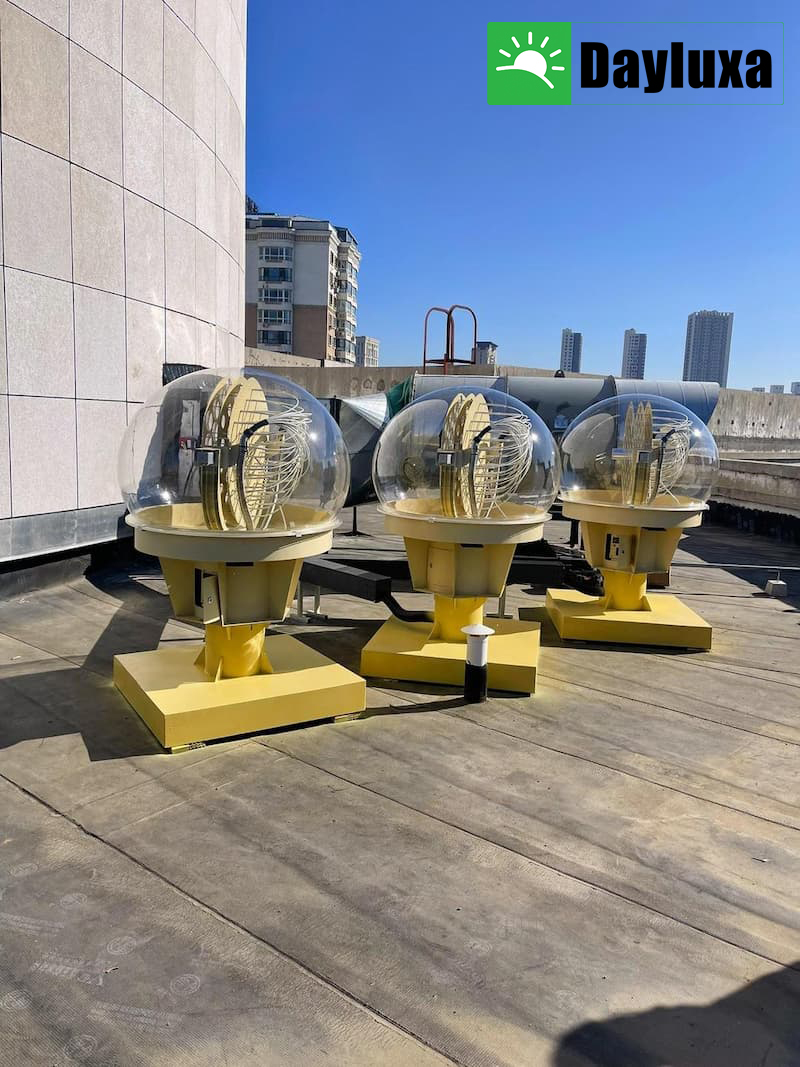
Fiber Optic Daylighting: Capturing and Delivering Real Sunlight
How It Works
Fiber optic daylighting systems collect actual sunlight at roof level and transport it indoors through optical fibers. A typical system like Dayluxa uses an array of Fresnel lenses—each 100mm in diameter—to focus parallel sunlight onto the input end of quartz optical fibers. The concentrated light travels through the fiber via total internal reflection, arriving at interior spaces as genuine, unaltered sunlight.
The key engineering achievement lies in the fiber itself. Low-hydroxyl high-purity quartz glass (1500μm core diameter) transmits visible light with less than 10dB/km attenuation while filtering out ultraviolet and infrared radiation. This means the light delivered indoors carries the full visible spectrum of sunlight without the heat or UV damage associated with direct solar exposure.
Technical Specifications That Matter
Measured performance data reveals what fiber optic daylighting can actually deliver. Under standard test conditions (outdoor illuminance approximately 150,000 lux on a clear noon), a single quartz fiber achieves:
At 30 meters transmission distance with 1-meter projection: approximately 1,100 lux—exceeding typical office lighting standards. At 50 meters with 1-meter projection: approximately 800 lux, sufficient for office and educational tasks. Even at 100 meters transmission, the system delivers 200 lux at 1-meter projection, suitable for underground space supplementation.
These measurements represent something LED systems cannot replicate: CRI (Color Rendering Index) of 100, identical to natural sunlight. The light contains the complete spectral power distribution that human biology evolved to expect.
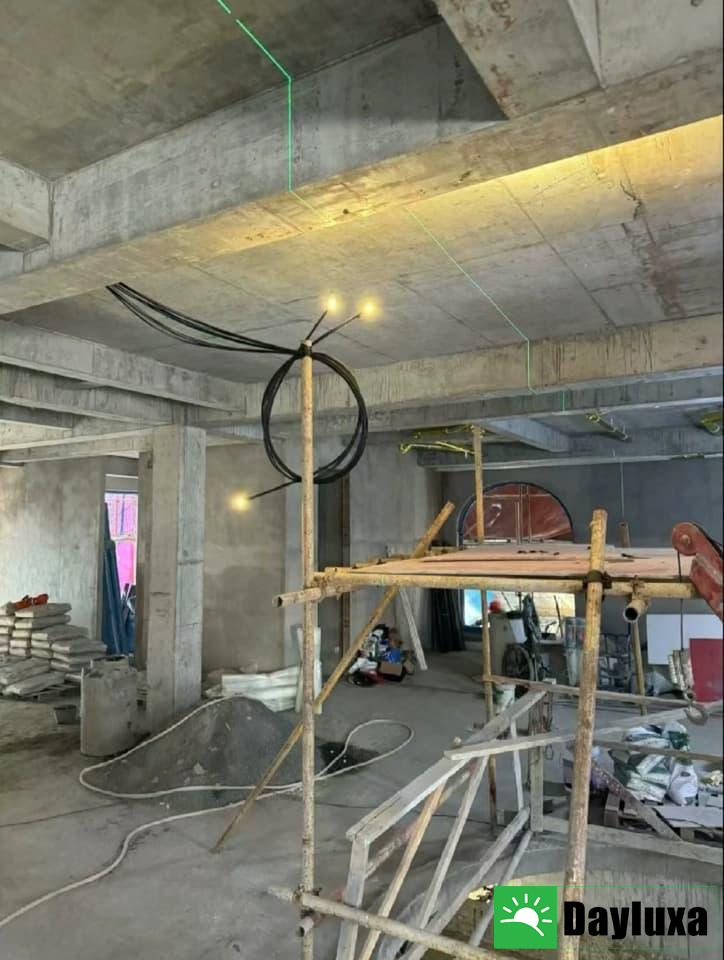
LED Full-Spectrum Lighting: Engineering an Artificial Sun
The Technology Approach
LED full-spectrum lighting takes a different philosophy: simulate natural light using engineered phosphor combinations and multi-chip LED arrays. Modern full-spectrum LEDs achieve CRI values of 90-97, with some premium products claiming 98-99.
These systems typically combine multiple LED chips—warm white, cool white, and sometimes dedicated red, green, and blue emitters—controlled by sophisticated drivers that can adjust color temperature throughout the day. The goal is to mimic the spectral characteristics and temporal patterns of natural daylight.
Performance Capabilities
High-quality LED full-spectrum fixtures can deliver 300-500 lux consistently, meeting most workplace illuminance standards. Advanced tunable-white systems can shift from 2700K (warm) to 6500K (daylight) color temperatures, supporting circadian rhythm alignment.
Energy efficiency remains LED's primary advantage. Modern fixtures achieve 120-150 lumens per watt, significantly better than fluorescent alternatives. However, this efficiency comparison only applies to the light source itself—the energy must still come from the electrical grid.
Head-to-Head Comparison: Six Critical Dimensions
1. Spectral Authenticity
Fiber optic daylighting delivers the complete solar spectrum with zero modification. Every wavelength present in sunlight arrives at the interior space, including subtle spectral features that LED phosphor systems may not fully reproduce. Research published in the Journal of Biological Rhythms suggests that even small spectral gaps can affect melatonin suppression and circadian entrainment.
LED full-spectrum systems, while impressive in their CRI ratings, remain engineered approximations. The phosphor conversion process inevitably creates spectral gaps or peaks that differ from true sunlight distribution.
2. Energy Consumption
This comparison reveals a fundamental difference. Fiber optic daylighting consumes approximately 12 watts for tracking and control systems during daylight hours—the actual illumination requires zero electrical energy. For a system like Dayluxa DY60 serving 180 square meters, this translates to effectively free lighting for 8-12 hours daily.
LED full-spectrum systems, despite their efficiency, consume 100% electrical energy. A 400-lumen full-spectrum LED fixture drawing 5-7 watts may seem efficient, but multiply this across dozens of fixtures in a commercial space, operating 10+ hours daily, and annual consumption becomes substantial.
3. Health and Biological Impact
The distinction here extends beyond illuminance levels. Natural sunlight contains subtle spectral variations and intensity fluctuations throughout the day that serve as biological time cues. Fiber optic systems preserve these characteristics because they transmit actual sunlight, not a static simulation.
Pittsburgh University research found that patients in rooms with natural light recovered 16% faster than those under artificial lighting. China CDC data indicates that students in naturally lit classrooms experience 25-30% lower myopia rates. These benefits correlate with receiving genuine full-spectrum light, not merely high-CRI artificial light.
4. Installation Flexibility
Fiber optic daylighting excels in reaching spaces that traditional methods cannot. Optical fibers can travel 30-100 meters, bend around obstacles, and split to serve multiple rooms from a single collector. This makes basement levels, interior rooms, and underground facilities viable for natural lighting.
LED systems require electrical infrastructure to every fixture location. While this is standard in modern construction, retrofitting existing spaces or illuminating areas far from electrical panels adds complexity and cost.
5. Long-Term Operating Costs
Consider a 200 square meter underground parking level requiring 24-hour illumination. LED systems at 200 lux would consume approximately 2,000-3,000 kWh annually. At commercial electricity rates, this represents significant ongoing expense.
A fiber optic daylighting system with LED backup provides free illumination during 8-12 daylight hours, only consuming electricity during nighttime and heavily overcast conditions. Annual electricity consumption drops by 60-70% compared to full LED operation.
6. Environmental Conditions
Optical fiber transmission eliminates infrared radiation from delivered light, meaning no additional cooling load—a significant advantage in climate-controlled spaces. LED fixtures, while cooler than incandescent sources, still generate heat that building HVAC systems must remove.
UV filtration through quartz fiber also protects sensitive materials in museums, galleries, and archival spaces without requiring additional filtering films or coatings.
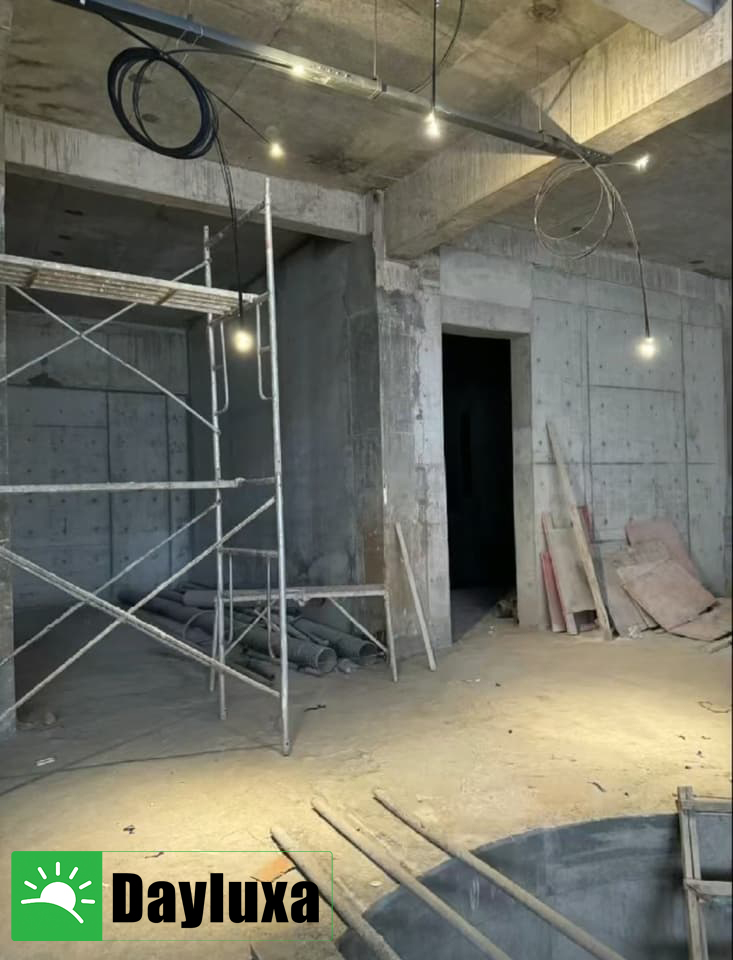
When to Choose Which Technology
Choose Fiber Optic Daylighting When:
Spaces are far from exterior walls or below grade. Health outcomes are primary objectives—healthcare facilities, schools, senior care. Energy reduction and green building certification are project goals. The application involves light-sensitive materials or occupants. Long-term operating cost minimization is essential.
Choose LED Full-Spectrum When:
Spaces have no roof access for collector installation. 24-hour consistent illumination is required without variation. Budget constraints prevent initial fiber optic system investment. The building has abundant existing electrical infrastructure.
Hybrid Approach: The Best of Both
Many modern installations combine both technologies. Fiber optic daylighting provides primary illumination during daylight hours, while LED systems activate automatically during evenings and overcast conditions. Systems like Dayluxa integrate this directly—their diffuser fixtures contain built-in LED modules that switch seamlessly when natural light diminishes.
This hybrid approach captures the health benefits and energy savings of real sunlight while guaranteeing consistent illumination regardless of weather or time. For architects and building owners seeking LEED, WELL, or Chinese Green Building certification, this combination addresses both energy performance and occupant health criteria.
As building codes increasingly recognize the importance of circadian lighting and energy efficiency, understanding the distinction between delivering real sunlight and simulating it becomes not just a technical curiosity but a practical design decision with measurable impacts on building performance and human wellbeing.