Dayluxa: A High-Performance Alternative to Parans Fiber Optic Daylighting Systems
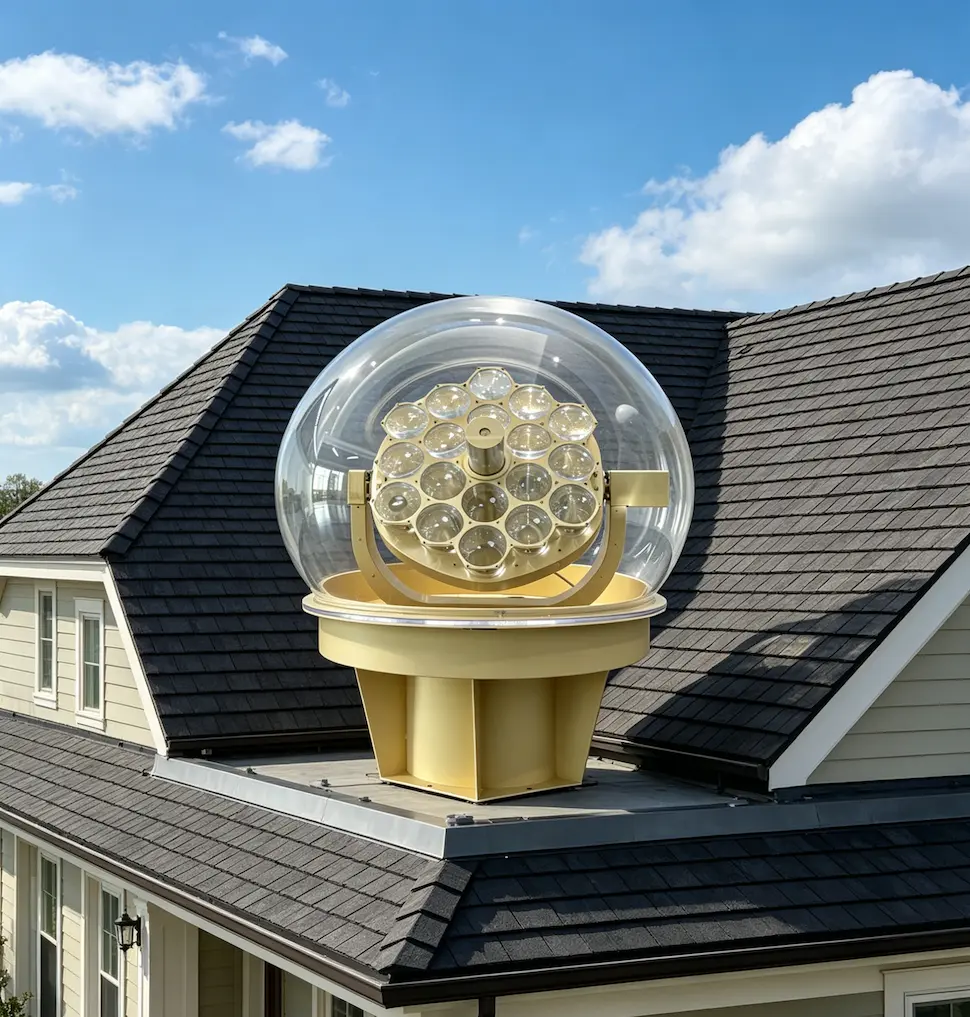
Introduction: The Parans Legacy and the Need for Alternatives
Parans, originating from Sweden, established itself as one of the pioneering brands in the fiber optic daylighting industry. By utilizing Fresnel lenses to collect sunlight and high-purity quartz fibers to transmit light over distances, Parans introduced natural daylight into building spaces that traditionally lacked access to natural light. This technology gained recognition across European commercial and residential markets, particularly for installations in offices, schools, and healthcare facilities.
However, as building designs become more complex and architectural requirements grow more demanding, specifiers and building owners increasingly seek alternatives that offer superior performance specifications, more flexible installation options, and enhanced system reliability. This article examines Dayluxa as a high-performance alternative to Parans systems, providing detailed technical comparisons to support informed decision-making.
Understanding the Core Technology: How Fiber Optic Daylighting Works
Both Parans and Dayluxa operate on the same fundamental principle: collecting direct sunlight through optical lenses, transmitting it through high-purity quartz fibers, and distributing it indoors via diffusion fixtures. This technology enables natural daylight to reach building cores, basements, and spaces located multiple floors away from the building envelope.
The critical components include the sunlight collector (Fresnel lens array), the transmission medium (quartz optical fiber), and the indoor delivery system (diffusion luminaire). The performance of each component determines the overall system efficiency, transmission distance capability, and lighting quality delivered to end users.
Technical Comparison: Dayluxa vs. Parans
The following table summarizes key technical specifications for both systems:
| Specification | Dayluxa | Parans |
|---|---|---|
| Lens Technology | Fresnel lens array, 100mm diameter per lens | Fresnel lens array, standard size |
| Fiber Type | Pure low-OH silica, 1500um core | High-OH silica fiber |
| Maximum Transmission Distance | 100+ meters | Up to 20 meters |
| Attenuation Rate | <10 dB/km at 1000nm | Standard attenuation |
| UV/IR Filtering | Complete filtration at output | Partial filtration |
| Backup Lighting | Built-in LED module (auto-switch) | External or optional |
| Sun Tracking | GPS + astronomical algorithm + dual-axis motor | Standard tracking system |
Transmission Distance: The Critical Differentiator
Transmission distance represents the most significant performance gap between Dayluxa and Parans systems. Dayluxa's high-purity quartz optical fiber with ultra-low attenuation (<10 dB/km) enables effective light transmission over distances exceeding 100 meters. In contrast, Parans systems typically support maximum transmission distances of approximately 20 meters.
This difference has profound implications for building design:
- Multi-floor penetration: Dayluxa can deliver natural daylight to spaces located 5-8 floors below the roof-mounted collector, whereas Parans is limited to 1-2 floors
- Horizontal reach: Dayluxa can serve spaces up to 100 meters horizontally from the collector, enabling daylight access to building cores and interior zones
- Design flexibility: Architects gain greater freedom to position daylight delivery points without compromising natural light quality
Illuminance Performance Data
Measured illuminance data demonstrates Dayluxa's superior transmission efficiency:
| Fiber Length | Irradiation Distance | Measured Illuminance | Application Reference |
|---|---|---|---|
| 30 meters | 1 meter | ~1100 lux | Above standard office lighting (400-500 lux) |
| 50 meters | 1 meter | ~800 lux | Meets office/workstation requirements |
| 100 meters | 1 meter | ~200 lux | Suitable for basement supplementation |
Test conditions: Outdoor illuminance approximately 150,000 lux (clear sky, noon). Single-core quartz fiber measurement.
Application Scenarios: Where Dayluxa Excels
Deep Basement Spaces
Buildings with multiple underground levels face persistent challenges in providing natural daylight. Dayluxa's 100+ meter transmission capability enables a single rooftop collector to serve basement levels B2 through B5, delivering genuine sunlight rather than artificial supplementation. This capability is particularly valuable for underground parking structures, storage facilities, and subterranean commercial spaces.
Core Zone Illumination
Large floor plates common in commercial towers create interior zones positioned 30-50 meters from the building facade. Dayluxa systems can penetrate these distances while maintaining sufficient illuminance for productive work environments, reducing reliance on artificial lighting during daytime hours.
Heritage Building Retrofits
Historic structures often prohibit facade modifications or rooftop alterations. Dayluxa's minimal structural intervention requirement—needing only a small penetration point for fiber routing—makes it suitable for daylighting retrofits in heritage buildings where traditional skylight installation would be prohibited.
System Reliability and Maintenance
Dayluxa systems incorporate several reliability features that distinguish them from alternatives:
- Automatic LED fallback ensures continuous illumination during overcast conditions or nighttime hours
- GPS-synchronized sun tracking maintains optimal collection efficiency throughout the day
- Quartz fiber longevity exceeds 25 years under normal operating conditions
- No fiber replacement required during system lifetime
Making the Right Choice
Selecting between Parans and Dayluxa depends on specific project requirements. Parans represents a established technology suitable for projects with moderate transmission distance requirements and budgets aligned with standard commercial specifications. Dayluxa offers enhanced performance across all key metrics—longer transmission distance, higher illuminance output, and greater installation flexibility—making it the preferred choice for projects demanding maximum natural daylight penetration.
For projects requiring natural daylight delivery beyond 30 meters from the collector, or applications demanding the highest possible illuminance at extended distances, Dayluxa provides a demonstrably superior solution. The combination of ultra-low attenuation fiber optics, GPS-synchronized tracking, and integrated LED backup creates a system architecture optimized for real-world building conditions.